Hypospadias in Boys: A Parent's Guide to Treatment
Hypospadias affects how the urethra develops in boys. This guide explains symptoms, timing of surgery, types of repair, and the care families receive at our hospital.
Understanding hypospadias
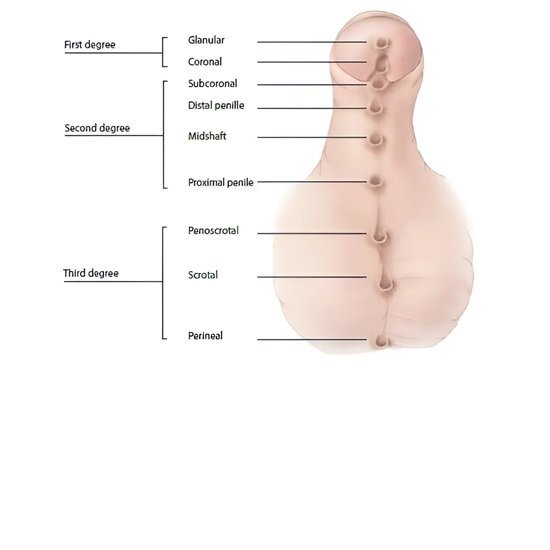
Hypospadias is a congenital condition in boys where the urethral opening is located on the underside of the penis rather than at the tip. It affects roughly 1 in every 200–300 newborn boys and varies in severity from mild (opening near the tip) to severe (opening near the scrotum or perineum).
Many boys with hypospadias also have chordee — a downward curvature of the penis — and a hooded appearance of the foreskin. These features are evaluated together when planning surgery.
Signs parents may notice
- Urethral opening on the underside of the penis instead of the tip
- Downward curvature of the penis (chordee)
- Hooded foreskin with missing tissue on the underside
- Spraying or difficulty directing the urinary stream while toilet training
When is surgery performed?
Hypospadias repair is typically performed between 6 and 18 months of age, when anesthesia is safe and before the child develops strong awareness of body image. In some cases, especially with more severe forms, surgery may be done in stages.
The goals of surgery are to straighten the penis, create a functional urethra opening at the tip, and achieve a natural appearance. With modern techniques and experienced surgeons, success rates are very high.
Types of hypospadias repair
- Distal hypospadias — often repaired in a single stage with excellent outcomes
- Proximal hypospadias — may require staged repair depending on severity
- Chordee correction — performed as part of repair to straighten the penis
- Urethroplasty — reconstruction of the urethral tube to the tip of the penis
Care at Shreeji Surgical Hospital
Our pediatric urology and surgery team has extensive experience in hypospadias repair. Before surgery, we explain the procedure, expected hospital stay, catheter care, and long-term follow-up. Most children stay in hospital for one to two days after surgery.
A small catheter may remain in place for one to two weeks to allow the new urethra to heal. Parents receive detailed instructions on catheter care, bathing, pain management, and signs that require urgent contact. Follow-up visits monitor healing, urinary function, and development.
Long-term outlook
Most boys achieve normal urination and satisfactory cosmetic results after hypospadias repair. Long-term follow-up into adolescence may be recommended for some children, especially after more complex repairs. Early expert care supports both physical outcomes and family confidence.
Key takeaways
- Hypospadias is common and highly treatable with expert pediatric surgical care
- Early repair supports normal urination and healthy psychosocial development
- Shreeji Surgical Hospital offers specialized reconstructive pediatric urology
- Families receive step-by-step guidance from consultation through full recovery
